
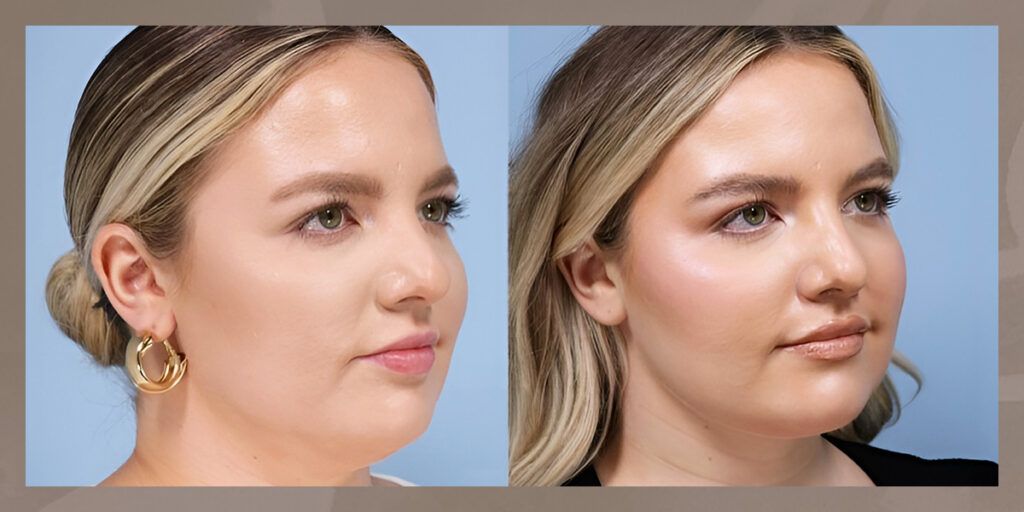
You glance in the mirror and notice your jawline looks softer than it once did, or a double chin has quietly begun to form. A well-defined jaw plays a surprisingly large role in how balanced and youthful your face appears.
Bone loss, shifting fat pads and declining skin elasticity all contribute to those changes, with genetics influencing when they appear. At L&P Aesthetics, our providers help you understand what’s driving your jawline changes before recommending a treatment plan.
Why Does the Jawline Change Over Time?
Age-driven tissue loss and inherited bone structure are the two main reasons a defined jawline softens over time. Most patients experience a combination of these factors — the right treatment plan must account for each one:
Collagen and elastin loss: Collagen and elastin production slow with age, gradually reducing the skin’s firmness and its ability to recoil. Soft tissue in the cheeks then drapes over the mandibular border, forming jowls over time.
Bone resorption: The bony framework of the chin and jaw may erode with age, especially at the chin and gonial angle, further weakening support for the overlying tissue. This makes the jawline look flatter and the lower face heavier.
Inherited bone structure: Genetics determines the shape and projection of your mandible. Some patients are simply born with a smaller chin or a softer gonial angle, which creates a rounder, less defined look from the start. Patients with naturally less bone structure tend to respond best to jawline sculpting treatments that rebuild a supportive foundation.
Fat distribution and submental fullness: Submental fat is a localized fat pad sitting between the chin and the upper neck. Genetics determines where the body stores fat, explaining why patients at a healthy weight still develop a double chin. That fullness blurs the jaw-to-neck transition, obscuring definition along the lower face.
Nonsurgical Jawline Contouring Options
Nonsurgical jawline contouring works best for mild-to-moderate concerns or for patients who want to avoid surgery altogether. Fillers and fat-reduction injectables refine contour and enhance definition with minimal downtime. Results are temporary or semipermanent, which allows for gradual adjustments over time.
Dermal Fillers for Sculpting and Defining the Mandibular Border
Hyaluronic acid fillers injected along the mandibular border add structure and sharpen contour with impressive precision. Careful placement can straighten a wavy jawline, camouflage early jowls and improve overall facial symmetry, with a high satisfaction rate and few to no side effects.
Juvederm Volux XC is FDA-approved for jawline contouring and shows high patient satisfaction in clinical studies. Most patients return to normal activities quickly, with any swelling or bruising subsiding within days. Results typically last nine to 12 months.
Kybella for Reducing Double Chin
Kybella uses deoxycholic acid to physically rupture submental fat cells, which the lymphatic system then clears from the body over time. Treated fat cells do not regenerate, though patients who maintain a stable weight after treatment tend to see longer-lasting improvements.
Up to six treatments may be administered, spaced at least a month apart. Significant swelling and firmness after each session are normal, a temporary phase patients commonly call “bullfrog neck.” As the only FDA-approved injectable for moderate-to-severe submental fat, Kybella offers a clinically validated path to a cleaner jaw-to-neck transition.
Surgical Jawline Contouring Options for Longer-Lasting Results
Surgery is the definitive option for patients with significant skin laxity or pronounced jowls. Jawline sculpting at a surgical level reaches deeper tissue layers that injectables alone can’t address. Patients with major structural deficiencies see more dramatic, longer-lasting change through surgery than through nonsurgical options.
The L&P Midline Neck Lift
The L&P Midline Neck Lift addresses significant skin and muscle laxity by tightening and repositioning the platysma muscle while redraping excess skin. Restoring a sharper chin-to-neck angle also smooths the vertical banding that develops as the platysma loosens. Recovery means one to two weeks of social downtime as bruising and swelling subside. Individual results vary, but L&P Aesthetics’ San Francisco Bay Area patients show high satisfaction rates.
Chin Augmentation and Jaw Implants
If you’re looking for jawline contouring near San Francisco Bay, we offer both jaw angle implants and chin augmentation procedures at L&P Aesthetics for lasting structural definition. The increased proportion and added width from implants balance facial proportions. Once the implant integrates and the surrounding tissues heal, results tend to be long-lasting, although the skin continues to age naturally.
Many patients find that implants pair well with a neck lift, addressing both skeletal deficiency and soft-tissue laxity in a single procedure.
How to Choose the Right Jawline Contouring Path for You
An in-person exam assesses your skin quality, fat distribution and jaw projection before any treatment selection. Identifying whether fat, skin or bone is the main concern guides every decision.
Matching the Treatment to Your Primary Concern
At L&P Aesthetics, we’ll recommend treatment based on the outcome of our assessment. Common conditions and their treatments include the following:
- A double chin and reasonably firm skin point to Kybella as a logical first step.
- Mild sagging or lack of definition along the mandibular border usually responds well to fillers.
- Prominent jowls or loose neck skin should be addressed with a surgical consultation.
- A weak chin can benefit from implants or structural filler techniques.
- Visible platysmal banding, along with significant skin laxity, points toward a neck lift.
A Candid Look at Longevity Results and Recovery Time
Treatment longevity and recovery time differ greatly between nonsurgical and surgical paths. Understanding both helps you set realistic expectations before committing to a treatment plan.
For nonsurgical treatments, expect:
- Results that develop gradually over several weeks.
- Maintenance appointments to monitor your body’s metabolism of injectable products.
- A low-risk entry point for patients who want to assess response before committing to more involved procedures.
For surgical treatments, expect:
- A more significant recovery period with results emerging over several months.
- Long-term structural changes that nonsurgical treatments can’t replicate.
- A single procedure that addresses multiple concerns at once.
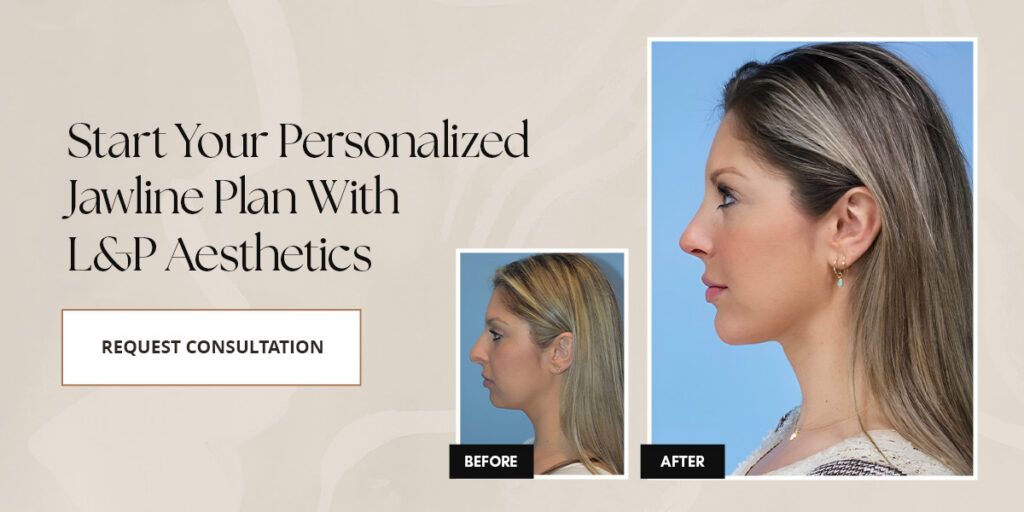
Start Your Personalized Jawline Plan With L&P Aesthetics
A guide can educate, but only a one-on-one consultation can identify the right option for your anatomy and goals. An assessment by a qualified professional ensures you choose the treatment that will achieve your goal and last as long as possible.
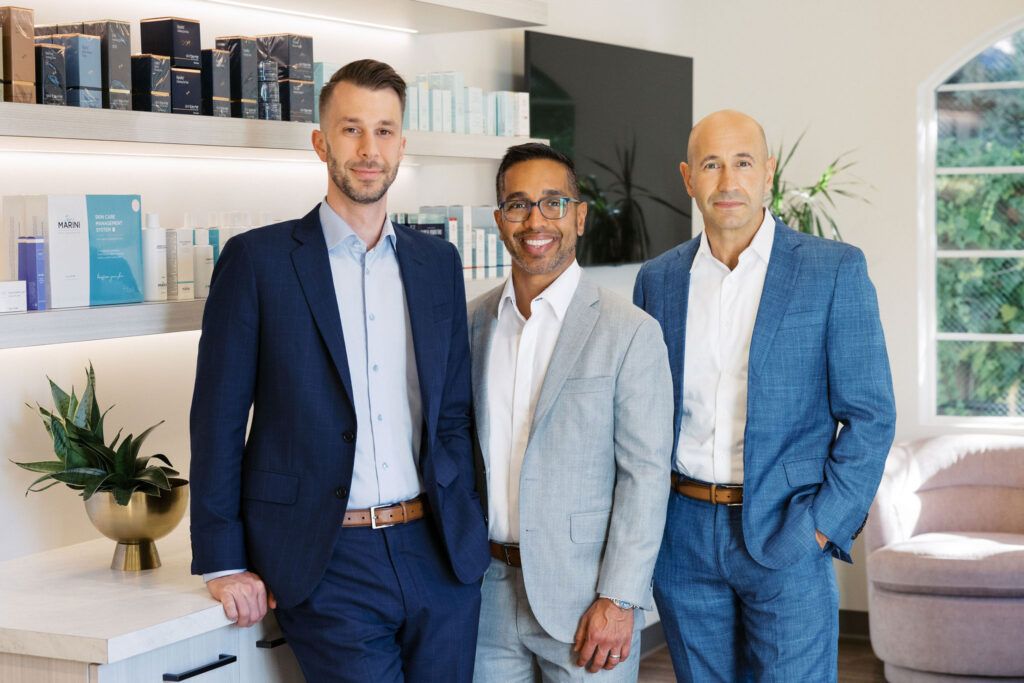
L&P Aesthetics offers a full spectrum of jawline contouring treatments, guided by double board-certified facial plastic surgeons with specialized expertise in facial anatomy. Schedule your personalized consultation today and see how we can help you achieve a sharper, more defined jawline.
Frequently Asked Questions
Common questions about jawline interventions include:
There’s no fixed minimum age, although we usually work with patients in their 20s and older. Patients in their 20s and 30s are more likely to address structural concerns, while those in their 40s or 50s are often dealing with early jowling and skin laxity.
A history of significant jaw filler may leave scar tissue that can complicate placement. Active skin infections, autoimmune conditions affecting wound healing or a history of keloid formation near the jaw or neck are relative contraindications. Patients on blood thinners may also experience more severe bruising and should consult their doctor before treatment.
Kybella destroys submental fat cells, but significant weight gain can expand the remaining cells in adjacent areas, partially reducing the improvement. Filler results are largely unaffected by modest changes, although notable weight loss can accelerate laxity. Implant and neck lift outcomes are generally stable, but significant weight gain can alter results over time.
Please note: Every patient is unique. Always follow the guidance of your licensed medical provider when planning any injectable treatment.
People Also Read:
You can typically combine a midface lift with other procedures to create a more balanced and harmonious result. Popular combinations include lower eyelid surgery, a brow lift, fat transfer for added volume, or skin resurfacing treatments to improve skin quality.
If you’re not ready for surgery or just exploring options, there are several alternatives to a midface lift that target similar concerns like sagging cheeks, nasolabial folds, and under-eye hollows:
Non-surgical Alternatives:
- Dermal Fillers
- Adds volume to the cheeks and under-eye area.
- Can lift the midface subtly and smooth out deep lines.
- Results are temporary (6–18 months depending on product).
- Ultrasound or Radiofrequency Treatments (e.g., Ultherapy, Thermage)
- Stimulate collagen to tighten and lift skin gradually.
- Non-invasive with no downtime, but results are more subtle.
- Microneedling with RF (e.g., Morpheus8)
- Improves skin texture and tightens slightly.
- Can be paired with other treatments for better results.
- Laser Resurfacing or Chemical Peels
- Helps with skin texture, fine lines, and pigmentation, but won’t lift much.
Minimally Invasive Options:
- Fat Transfer
- Restores volume using your own fat.
- More natural and longer-lasting than fillers, but requires a small procedure.
An endoscopic midface lift will not leave noticeable scars — especially when done by an experienced surgeon. Drs. Lieberman, Parikh, and Curti are as thoughtful as possible about ensuring scars, if any, are minimal and well hidden. No matter the incision, it is paramount to maintain proper aftercare to ensure that scars stay invisible.
The results of a midface typically last up to 10 years. Results vary from person to person, depending on your personal anatomy and any other combined procedures.
The ideal candidate for a midface lift is someone who it yet to experience the more pronounced visible signs of aging. Normally, these patients are in their 30s or 40s and don’t yet need the intensity of a deep-plane lift, but still want to address their skin’s laxity.
A midface lift primarily focuses on the area between the cheek and lower eyelid. With endoscopic incisions, all that you’ll be able to see is a rejuvenated midface and no scars.
The midface lift may affect your facial expressions in the days and weeks immediately following the procedure while you heal. However, the muscles in your face that create facial expressions are not impacted by the procedure, and you will simply look like a more rested and refreshed version of yourself.
For specific anatomy that has had a loss in volume, Drs. Lieberman, Parikh, and Curti may recommend supplementing the endoscopic midface lift with other procedures, such as fat transfer, for the best result.
If you are concerned about your specific skin type, our double-board-certified facial plastic surgeons will be able to properly assess your needs and recommend the best treatment pathway.
We recommend taking 7-10 days off of your normal routine, including work, to give yourself the proper time to heal.