The Facelift Experts: L&P Aesthetics
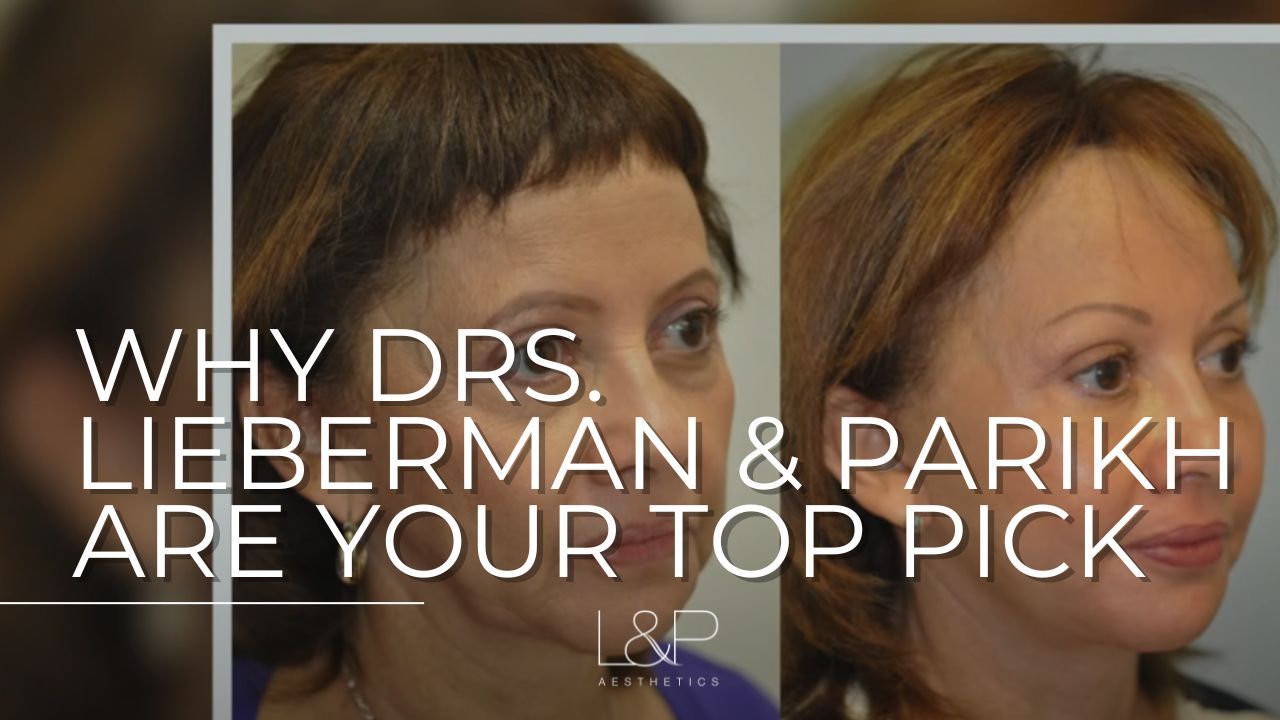
The three double board-certified facial plastic surgeons at L&P Aesthetics are recognized worldwide for providing natural-looking facelift results. Top facelift surgeons, Dr. David M. Lieberman, Dr. Sachin S. Parikh and Dr. Steven A. Curti, offer each patient personalized care, tailored to their unique facial features. This includes calculating the optimal vectors for lifting the face and neck to achieve as natural a result as possible. Lifting the deeper facial structures and tightening the facial skin at the correct angle can help deliver the ideal surgical result for each individual patient.
This intricate nuance will help the results appear as natural as possible while minimizing such undesired effects as pleating of the skin near the ears, bunching of the skin under the chin or the mid-face, or flattening of the mid-face that can occur if the skin is pulled in an overly vertical or horizontal direction.

Understanding the L&P Signature Deep Plane Facelift
When patients seek a facelift in Palo Alto, they typically want natural-looking results rather than an obvious surgical look. The L&P Signature Deep Plane Facelift is designed to achieve this by repositioning deeper facial structures rather than simply pulling the skin tighter. While many surgeons focus solely on skin removal, our double board-certified facial plastic surgeons address the underlying architecture of the face and neck to create balanced, natural-looking contours.
A deep plane facelift lifts and repositions the deeper support layers beneath the skin, including the SMAS layer. At L&P Aesthetics, this approach can also include advanced techniques, such as the Minimal Access Deep-Plane Extended approach, when appropriate for a patient’s anatomy. The goal is to support the midface, soften the appearance of smile lines, improve the lower face, and refine the neck without creating a pulled appearance.
In a consultation, we will explain whether a deep plane facelift and neck lift, a mini facelift, or another approach is best suited to your anatomy and goals.
What You'll Actually See in the Mirror
Here are some results you can expect:
-
Deep-plane facelift and neck lift: You see a cleaner jawline and a smoother transition into the neck, with less jowling and more definition from the front and profile. The midface looks more supported, and smile lines appear softer because the lift addresses the deeper structure, not just the skin.
-
Mini facelift: With a mini facelift, you see sharper lower-face contours and reduced early jowling, with a more defined jawline when neck concerns are minimal. The goal is a refreshed look that still feels like you, without a dramatic change.
Your surgeon will recommend the technique that best fits your facial anatomy, aging pattern, and goals, whether that is a mini facelift, a deep plane facelift and neck lift, or a more comprehensive facial rejuvenation plan.


An additional benefit of having surgery with L&P Aesthetics is access to The iO Clinic’s Surgical Recovery Package, specially designed by Drs. Lieberman, Parikh, and Curti.
This post-operative recovery protocol:
- Enhances your overall recovery experience
- Speeds up the recovery timeframe
- Improves your long-term results
- Provides comprehensive support throughout your healing journey
Our integrated approach to surgical care sets us apart, ensuring you receive optimal results with maximum comfort.
What to Expect Before Facelift Surgery
Prior to facelift surgery, patients should avoid anything that might negatively impact their skin health, hydration, and flexibility, as well as anything that might impede normal blood circulation. For this reason, patients shouldn’t smoke at all in the month before their procedure, and shouldn’t take any aspirin, blood thinners, or skin rejuvenation creams within the 2 weeks prior. It’s also advised to avoid any significant sun tanning in the weeks leading up to a facelift.
What to Expect During Facelift Surgery
The surgeons at L&P Aesthetics, along with our anesthesia team and entire peri-operative staff, are dedicated to supporting you every step of the way throughout your deep plane facelift journey. Prior to your surgery, we’ll provide comprehensive pre-operative guidance, including detailed instructions and opportunities to speak with our team, ensuring you feel confident and well-prepared for the day of your procedure.
Your facelift will take place in our state-of-the-art surgical facility, Alma at Addison Surgery Center, where your comfort and safety are our top priorities. Most facelift procedures require general anesthesia, which will be administered by board-certified anesthesiologists. The surgery itself typically lasts several hours, and most patients return home the same day.
What to Expect After Facelift Surgery
You’ll need to arrange for a ride home, and we’ll provide you and your support team with thorough aftercare instructions to help with recovery. Some swelling and bruising, particularly in the first few days post-surgery, are normal and will gradually subside over the next few weeks. Our medical team will check in with you the evening of your surgery, as well as between your scheduled follow-up appointments, to ensure a smooth and safe recovery process.
Facelift Before and After Gallery
View real results from real patients below.

L&P Signature Deep Plane Facelift and Neck Lift
This patient underwent a remarkable transformation with our comprehensive facial rejuvenation approach. After a facelift, brow lift, lower blepharoplasty, and otoplasty, she feels confident that her appearance matches her youthful spirit.

Signature Facelift and Neck Lift
This gorgeous woman received the L&P Signature Facelift and Neck Lift, which is a great example of why we favor the Deep Plane approach. It lifts at the structural level, restoring youthful contours while maintaining a completely natural appearance that lasts.

Revision Lift Complimented with a Fat Transfer
You would never believe that this patient was in her late 60s! This beautiful patient is approximately five months out from her revision facelift and neck lift. This was a unique case because she had a previous face and neck lift with an outside surgeon a few years ago. She wanted to improve the laxity along her neckline and jawline. We also thought she could benefit from subtle volumetric improvements in her face so a fat transfer was the perfect compliment. The combination of procedures helped restore the natural volume in her face enhancing a more youthful appearance. You can see the improved transition from her lower eyelid to cheek junction, natural fullness in her cheekbones, and a sharp contour along her jawline. This is a wonderful example demonstrating that when this surgery is done well, people can look effortlessly beautiful.
Revision Lift Complimented with a Fat Transfer
You would never believe that this patient was in her late 60s! This beautiful patient is approximately five months out from her revision facelift and neck lift. This was a unique case because she had a previous face and neck lift with an outside surgeon a few years ago. She wanted to improve the laxity along her neckline and jawline. We also thought she could benefit from subtle volumetric improvements in her face so a fat transfer was the perfect compliment. The combination of procedures helped restore the natural volume in her face enhancing a more youthful appearance. You can see the improved transition from her lower eyelid to cheek junction, natural fullness in her cheekbones, and a sharp contour along her jawline. This is a wonderful example demonstrating that when this surgery is done well, people can look effortlessly beautiful.

Female Facelift at 51
This 51-year-old patient chose full surgical facial rejuvenation at L&P Aesthetics after nonsurgical treatments fell short, including a deep plane face and neck lift, brow lift, lower blepharoplasty, lip lift, and chin augmentation. At just three months post-op, her natural, vibrant results continue to improve under the care of our Stanford-trained surgeons in Palo Alto.
Benefits of a Facelift
Explore the benefits of a facelift in Los Gatos or Palo Alto
- Defined jawline: Reduces jowling to restore clearer jaw and neck definition.
- Restored midface fullness: Repositioning supports more natural cheek contours.
- Softened nasolabial folds: Addresses smile-line creases through deeper support, not just skin tightening.
- Smooth neck contour: Improves definition for a cleaner profile from multiple angles.
- Natural facial balance: Customized lifting preserves your distinctive features.
How Long Will Your Facelift Results Last?
When performed properly, deep-plane facelifts can deliver results that last seven to 15 years. Because the technique repositions deeper support structures, results often hold longer than skin-only approaches. You will still age naturally, but from a more youthful baseline.
How to Choose Your Facelift Surgeon
When looking for a facelift surgeon near you, confirm double board certification in facial plastic surgery, including otolaryngology training and an additional fellowship focused on facial procedures. Facelift surgery involves detailed anatomy, and specialized training matters.
Ask about deep-plane experience and review before-and-after photos of patients with similar facial structures. For those seeking a facelift surgeon in the Bay Area, the L&P Aesthetics team brings technical precision and an aesthetic approach designed for natural-looking outcomes.
Combining Procedures for Complete Rejuvenation
A facelift can be combined with other procedures to address areas that a lift does not fully change. The best combination depends on your anatomy, your goals and what will create the most balanced result.
-
Brow lift: Helps address forehead heaviness or a low brow position that can make the upper face look tired. Pairing a brow lift with a facelift can create more consistent rejuvenation from the upper face through the jawline.
-
Eyelid surgery (blepharoplasty): Corrects hooding or puffiness around the eyes, which a facelift does not treat. This option is useful when patients want their eyes to look more rested and open.
-
Neck lift: Targets neck laxity, banding, or fullness to improve definition below the jawline. Adding a neck lift can help create a cleaner profile and more complete lower-face rejuvenation.
-
Fat grafting: Restores volume where tissue loss is a normal part of aging, such as the temples, cheeks, or the area around the mouth. Fat grafting can complement lifting by improving contours and softening hollowing.
-
Injectables: Can be used before or after surgery to refine facial balance or help maintain results over time. Injectables are not a substitute for lifting, but they can add targeted finishing touches to support your goals.
Facelift Considerations for Men
Male patients often need incision placement that preserves sideburns and beard hair. Technique is also adjusted for thicker skin and different facial anatomy to support natural-looking results.
What to Expect With Anesthesia
Facelift procedures are performed under general anesthesia in our fully accredited Alma At Addison Surgical Center. Our anesthesia team reviews your medical history beforehand and monitors you throughout surgery and after the procedure.
Finding the Right Procedure for Your Situation
A mini facelift is often a fit for patients focused on early jowling who want a shorter downtime. An L&P Signature Deep Plane Facelift and Neck Lift may be better when jowling, neck laxity and midface descent are more advanced. We review options and timing during your consultation.
Recovery Guidance Week by Week
Here’s a general overview of what your recovery will look like:
- Week one: Swelling and bruising are most noticeable. Sleep elevated and avoid bending or lifting heavy objects.
- Week two: Swelling continues to improve. Many return to desk work and light social activities.
- Weeks three to four: Most visible healing is complete. Resume normal routines as cleared.
- Weeks six to 12: Results continue refining, with major changes visible by about three months.
Schedule a Consultation Today
Contact L&P Aesthetics to schedule a consultation. If you are considering a facelift, our team can help you understand your options and what fits your goals.
Every Person is Our Top Priority
Trust Your Beauty To An Award-Winning Team of Aesthetic Experts
America’s Best Plastic Surgeons by Newsweek, 2024
Best Plastic Surgeons by Palo Alto Weekly, 2024 – 2026
Best of Silicon Valley Magazine for Plastic Surgery, 2024 – 2026
Castle Connolly Top Doctors of San Francisco Bay Area, 2024 – 2026
New Beauty Top Doctors, 2019 – 2026
An Investment in the Most Visible Part of Who You Are
Precision surgical artistry. Stanford-trained expertise. Results that reveal your natural beauty.
Our patients, including physicians, executives, and leaders in their fields, choose L&P Aesthetics because facial rejuvenation at this level is a deeply personal investment in confidence and looking as vibrant as you feel. Because every treatment plan is personalized to your unique anatomy and goals, we discuss your investment during a private consultation.
Your investment reflects what sets L&P apart: three double-board-certified, Stanford-trained facial plastic surgeons dedicated exclusively to the face; the deep plane technique, widely regarded as the gold-level standard in facial rejuvenation, delivering the most natural, longest-lasting results available; a personalized treatment plan built on a thorough consultation and complimentary VISIA 3D skin analysis; and concierge-level care from pre-operative planning through comprehensive follow-up, including travel coordination for patients flying in to our Palo Alto or Los Gatos locations.
An investment of this significance deserves a conversation, not a price list. During your private consultation, your surgeon will evaluate your facial anatomy, discuss your goals, and provide a personalized recommendation with complete clarity on your options and your investment.
You’ve built an extraordinary life. Your reflection should match the vibrant energy you bring to everything you do.
What Is The Cost of a Facelift in Palo Alto and Los Gatos?
Meet The Facelift & Neck Lift Experts
Get to know our world-class, double-board certified facial plastic surgeons, known for the precision of their work and consistently satisfied patients. Drs. Lieberman, Parikh, and Curti, are known for providing the best facelifts with the most natural results. Learn why people fly from around the world for the L&P Signature Facelift & Neck Lift.


Facelift Recovery and Beyond
While surgical facelifts require more recovery time, their results are notably longer-lasting. However, it’s important to understand that while a facelift can significantly rejuvenate your appearance, it does not halt the natural aging process. Patients may still notice new signs of aging as they continue to age.
Facelift FAQs
Medically reviewed by Dr. David M. Lieberman, MD, Dr. Sachin S. Parikh, MD, and Dr. Steven A. Curti, MD—double board-certified facial plastic surgeons.
Reviewed for clinical accuracy, facelift candidacy, recovery guidance, procedural terminology, and patient safety. Last reviewed July 2026.
Facial aging happens on three levels at once: the skin and connective tissue lose elasticity and begin to sag, the deeper support structures descend, and the face loses volume. Together these create the changes most people first notice:
- Jowls forming along the jawline
- Deep folds running from the nose to the mouth (nasolabial folds) and downward from the corners of the mouth (marionette lines)
- Hollowing under the eyes and flattening of the cheeks
- Excess skin and fat beneath the chin
- Looseness and vertical banding in the neck
Because people now stay active and healthy later in life, this loss of definition often appears before someone feels older. Closing the gap between how you look and how you feel is what modern facial rejuvenation is designed to do, by restoring the face’s underlying structure rather than simply tightening skin.
A facelift repositions the deeper tissues of the face and removes excess skin to reduce sagging and restore definition along the cheeks, jawline, and neck. People typically choose it to address specific, structural signs of aging:
- Sagging skin on the face and neck
- Deep folds and creases on the cheeks and around the mouth
- Jowls along the jawline
- A loss of contour beneath the chin
- Volume loss in the cheeks
A facelift does not change who you are or freeze your expression. Done well, it makes you look rested and like yourself at an earlier point, not operated on.
A good candidate for a facelift is an adult in good general health who wants to correct moderate to significant sagging and folds in the face and neck. The most common signs that someone is a candidate include:
- Deep wrinkles on the cheeks and folds around the mouth
- Loose or sagging skin on the face and neck
- Noticeable jowls
- Volume loss in the cheeks and around the eyes
People with milder, earlier signs of aging may be better suited to a less invasive procedure. During a consultation, Dr. Lieberman, Dr. Parikh, or Dr. Curti will assess your anatomy, health, and goals to recommend the procedure that fits, which is not always the most extensive one.
No. A facelift repositions sagging tissue and removes excess skin, but it does not reduce blemishes, scars, redness, hyperpigmentation, or age spots. To even out skin tone and texture, the most effective options are skin-resurfacing treatments:
- Chemical peels
- Laser resurfacing
- Dermabrasion
These treatments address concerns like melasma, age spots, and acne scarring, and they can be combined with a facelift for a more complete rejuvenation. If skin quality is your main concern, resurfacing rather than surgery is usually the right starting point.
Yes. Because the surgeons at L&P Aesthetics focus specifically on the face, facelifts are frequently combined with other procedures to achieve balanced, natural results. Common pairings include:
- Eyelid surgery (blepharoplasty) or a brow lift, to rejuvenate the upper third of the face that a facelift does not address
- A neck lift or neck liposuction, for sagging or excess fat below the jawline
- Volume restoration with fat transfer or dermal fillers, to refill sunken areas
- Rhinoplasty, chin or facial implants, ear surgery, or hair restoration, for patients who want broader changes
A standard facelift addresses the face from the eyes down, so eyelid and brow procedures are a common addition. Your surgeon will help you decide what to combine in a single stage and what is better staged separately.
There is no upper age limit for a facelift. Candidacy depends on your health, not your age. Patients in their 30s through their 80s have all had successful facelifts, and the right time depends on your degree of facial aging and your goals, not a number. Before recommending surgery, your surgeon reviews several factors:
- Overall health and medical history
- Skin laxity and quality
- Risk of complications
There is no single right age for a facelift, which is why the decision is always based on a thorough, individual assessment.
Facelift incisions are placed within the hairline and in the natural creases around the ear, so any resulting scars are well concealed and typically fade over time. Every incision leaves some mark as it heals, but several factors keep facelift scarring minimal:
- Incisions are kept small and placed in discreet locations
- Healthy, hydrated skin heals more cleanly
- Keeping healing incisions out of direct sunlight prevents darkening, since UV exposure can make lines more noticeable
With careful incision placement and good aftercare, facelift scars are designed to be difficult to detect once healed.
Most patients report only mild discomfort after a facelift, which is well controlled with medication. The surgery itself is performed under anesthesia, so you do not feel pain during the procedure. Afterward:
- Pain is typically mild and manageable with prescribed or over-the-counter medication
- Bruising and swelling are common in the first one to two weeks and can feel tight or uncomfortable
- These symptoms subside gradually as the results settle
Everyone’s tolerance is different, but significant pain is not a typical part of facelift recovery.
A revision facelift corrects or refreshes the results of a previous facelift. Most often it is done years later to restore the youthful result of the original surgery. In some cases, it addresses problems left by an earlier operation, such as:
- An overdone or pulled appearance
- Unsightly scarring from excessive tension on the skin
- Distortion of key structures, such as a pixie ear (a pulled-down earlobe) or a cobra deformity in the neck
How long a first facelift lasts depends on the technique originally used. Revision surgery is technically demanding because the anatomy has already been altered. Dr. Lieberman, Dr. Parikh, and Dr. Curti work across all facelift techniques and regularly handle revision cases, building a customized plan around your exam and concerns.
Most patients feel comfortable in public about 10 to 14 days after a face and neck lift, and see their results look their best around 8 to 10 weeks. Recovery happens in two phases:
- Social downtime (about 10 to 14 days): the point at which most people feel comfortable running errands without feeling self-conscious. Some feel ready for a social event as early as 7 days.
- Final results (about 8 to 10 weeks): when residual swelling resolves and the result looks its best.
These are general ranges. If you combine procedures, such as laser resurfacing with a facelift, the early recovery phase can extend to about three weeks. Your surgeon will give you a personalized recovery plan and ways to optimize healing.
Yes. A facelift uses a combination of permanent and absorbable sutures beneath the skin to lift and hold the deeper tissues in the best direction. These deep sutures do not affect movement or any long-term outcome; they hold the repositioned tissue in place while it heals into its new position. Separately, sutures placed on the skin’s surface are removed in stages as you heal, most commonly at:
- 5 days after surgery
- 7 days after surgery
- 10 days after surgery
The exact pattern of the lift depends on your individual anatomy, facial size, and shape.
Most facelift surgery takes between 2 and 6 hours, depending on the technique and the complexity of your case. Typical durations by technique:
- Mini facelift: under 2 hours
- SMAS facelift: 2 to 4 hours
- Deep plane facelift: 4 to 6 hours
- L&P Signature Facelift: 6 to 8 hours
A more comprehensive technique takes longer because the surgeon is repositioning deeper structures, which is what produces the most natural, long-lasting results. Your surgeon will confirm your expected surgical time during your consultation as part of your customized plan.
Facelift longevity depends on the technique used, your skin quality and genetics, and your sun exposure and lifestyle. Techniques that reposition the deeper tissue tend to last the longest. Typical ranges:
- Mini facelift: 5 to 7 years
- SMAS facelift: 10 to 12 years
- Deep plane facelift: 10 to 15 years
- L&P Signature Facelift: 15 or more years
Beyond longevity, more comprehensive techniques like the deep plane and L&P Signature Facelift provide better mid-face correction and a result that looks refreshed rather than done. Individual results vary based on genetics, lifestyle, and skin quality.
Several factors influence longevity, and only some are within your control.
- Skin quality and elasticity. Skin with better elastic recoil generally holds a repositioned result more effectively than thin or heavily sun-damaged skin.
- Degree of laxity at the time of surgery. More advanced descent requires more correction, and more correction is subject to more relapse.
- Genetics. Family patterns of facial aging are a meaningful predictor and cannot be modified.
- Sun exposure. Cumulative ultraviolet damage degrades collagen and elastin directly.
- Smoking and nicotine use. These impair healing and accelerate skin aging.
- Weight fluctuation. Significant gain or loss alters facial volume and can change contour.
- Surgical technique and execution. Where tissue is released, how it is repositioned, and how tension is distributed all matter.
- Overall health. Sleep, nutrition, and stable general health support healing and long-term tissue quality.
These interact rather than acting independently, which is why two patients having the same procedure on the same day can follow different trajectories.
The habits that protect a surgical result are the same ones that slow facial aging generally, applied consistently.
- Follow post-operative instructions precisely. The early healing period sets the foundation for the final result.
- Use daily broad-spectrum sun protection. This is the highest-return habit available to you.
- Avoid smoking and nicotine in all forms.
- Maintain a stable weight. Repeated fluctuation works against facial contour.
- Care for skin quality, not just position. Surgery does not address tone, texture, or pigmentation, so a medical-grade skincare regimen addresses what surgery structurally cannot.
- Attend your follow-up appointments. Long-term follow-up lets your surgeon observe how your result is settling over time.
None of this stops aging. It does mean the aging that occurs starts from a better position and progresses in a face that is being actively cared for.
Most patients can take short, local trips about 10 to 14 days after a facelift, and longer trips once swelling has largely resolved. General guidance:
- Light errands and short trips: 10 to 14 days after surgery
- Longer trips: 4 to 5 weeks, once swelling has subsided
- Air travel: may require additional considerations due to cabin-pressure changes
Every patient heals differently, so your surgeon will give you personalized travel guidance based on your recovery. If you are traveling to us from out of the area, our patient coordinators can help you plan timing around these milestones.
Yes. We regularly perform facelifts for men, with techniques tailored to male facial anatomy, hairline, and beard patterns. Male facelifts call for specific considerations:
- Natural hairline and sideburn placement around the ears, with incisions planned around beard-growth patterns
- Preservation of masculine contour and facial angularity
- Results that look energized, not tightened
Dr. Lieberman, Dr. Parikh, and Dr. Curti, double board-certified facial plastic surgeons, plan each male facelift around these factors so the result looks natural and appropriately masculine.
The most effective treatment for sagging skin depends on how advanced the laxity is. Mild looseness often responds to nonsurgical treatments, while moderate to significant sagging is best corrected surgically. A general progression:
- Mild laxity: energy-based skin tightening (such as radiofrequency or microneedling with radiofrequency) and medical-grade skincare can firm early looseness.
- Moderate laxity: a mini or SMAS facelift addresses early jowls and mild neck sagging.
- Significant laxity: a deep plane facelift or the L&P Signature Facelift repositions the deeper facial structures for the most complete, longest-lasting correction.
Sagging happens because the skin, the deeper support tissues, and facial volume all change with age, so the most natural results come from treating the underlying structure, not only the surface. The right option is best determined by an in-person assessment of your skin quality and degree of laxity.
A deep plane facelift lifts and repositions the deeper layer of facial tissue (the SMAS and the muscles and ligaments beneath it) as a single unit, rather than only tightening the skin on the surface. By releasing and elevating the foundation that has descended with age, it restores the cheeks and midface and produces a result that looks natural rather than pulled. How it differs from a traditional facelift:
- A traditional skin-only or basic SMAS lift mainly tightens the surface layers, which can look tight and tends to relax sooner.
- A deep plane lift repositions the underlying structure, which corrects the midface and typically lasts longer (commonly 10 to 15 years).
At L&P Aesthetics, deep plane face and neck lifts are performed by Dr. Lieberman, Dr. Parikh, and Dr. Curti, double board-certified facial plastic surgeons with more than 50 years of combined experience.
The three techniques differ in how deep they work, which affects how much aging they correct and how long results last. In short, a mini facelift is the least invasive and best for early aging, a SMAS facelift addresses moderate aging, and a deep plane facelift corrects the most and lasts the longest.
- Mini facelift: best for early jowls and mild laxity; surgery under 2 hours; results last 5 to 7 years.
- SMAS facelift: best for moderate sagging and folds; surgery 2 to 4 hours; results last 10 to 12 years.
- Deep plane facelift: best for significant sagging and midface descent; surgery 4 to 6 hours; results last 10 to 15 years.
A deeper technique repositions more of the face’s supporting structure, which is what produces a natural, long-lasting result. The best choice depends on your degree of facial aging, your anatomy, and your goals, which your surgeon will assess during a consultation.
The most common sign that someone is considering a facelift is sagging in the lower face and neck that skincare and nonsurgical treatments no longer improve. Specific signs include:
- Jowls forming along a once-defined jawline
- Loose or sagging skin on the cheeks and neck
- Deep folds from the nose to the mouth and from the mouth downward
- A tired or heavy look in the lower face, even when well rested
- Loss of contour beneath the chin
A facelift addresses sagging and excess skin; it does not improve skin tone, fine surface lines, or the upper third of the face, which are treated with resurfacing, injectables, or a brow and eyelid procedure. If your main concern is structure and sagging, that is what a facelift is designed to correct.
Facelift cost varies based on the technique, the complexity of your case, and whether procedures are combined, so the most accurate figure comes from a consultation and a personalized quote. Several factors drive the price:
- The technique used (a mini facelift is less involved than a deep plane or the L&P Signature Facelift)
- Whether it is combined with other procedures, such as a neck lift, eyelid surgery, or fat transfer
- Anesthesia, facility, and follow-up care
- The training and experience of the surgeon
Your consultation includes a clear breakdown of what is and is not included, along with financing options. Because a facelift delivers a result measured in years, it is worth weighing cost against the experience of the surgeon and the durability of the technique.
The most reliable way to choose a facelift surgeon is to evaluate credentials, specialization, and actual results, rather than relying on advertising. Key things to check:
- Board certification: look for a surgeon certified in facial plastic surgery, and ideally double board-certified, which confirms specialized training in the face.
- Focus: surgeons who concentrate on the face, rather than the whole body, perform facial procedures more frequently.
- Before-and-after results: review real patient photos for results that look natural, with attention to patients whose starting point resembles yours.
- Technique: ask which facelift techniques they perform, since deeper techniques like the deep plane lift require advanced training.
- Reviews and consultation: read patient reviews, and use the consultation to judge whether the surgeon listens and sets realistic expectations.
At L&P Aesthetics, Dr. Lieberman, Dr. Parikh, and Dr. Curti are double board-certified facial plastic surgeons who focus exclusively on the face, with more than 50 years of combined experience. The right surgeon for you is one whose specialization, results, and approach match your goals.
The pulled or windswept look comes from a technique that tightens the skin under tension, not from facelifts in general. It is avoided by repositioning the deeper facial tissue rather than pulling the skin, and by choosing a surgeon who specializes in natural results.
That tight look happens when the skin is asked to do the lifting work it is not designed to do. Putting tension on skin can also widen scars and distort the earlobe over time. A deep plane facelift instead lifts and repositions the deeper layer (the SMAS and the muscles and ligaments beneath it), so the skin is redraped gently, without tension. The effect moves your face back toward where it sat earlier, rather than stretching it. To lower your risk of an overdone result:
- Choose a surgeon who focuses on the face and can show natural before-and-after results
- Ask which technique they use and why, since deeper techniques avoid putting tension on the skin
- Review photos of patients whose starting point resembles yours
At L&P Aesthetics, Dr. Lieberman, Dr. Parikh, and Dr. Curti use deep plane techniques specifically to reposition the underlying structure, so results look refreshed and natural rather than tight.
A weekend facelift is a marketing term for a quick, minimally invasive procedure with little downtime, usually a thread lift or limited skin tightening. It can refresh very early, mild aging, but it does not address the deeper structures, so the results are modest and short-lived compared with a surgical facelift.
Weekend facelift is not a single defined operation. It typically refers to thread lifts, limited mini-lifts, or energy-based skin tightening marketed on speed and low downtime. Because these work on the surface rather than the deeper support layer, they suit early, mild laxity, not moderate to significant sagging. They are also temporary: a thread lift, for example, typically lasts around 1 to 2 years, compared with 10 or more years for techniques that reposition the deeper tissue. When each makes sense:
- A quick, minimally invasive option may suit someone with very early, subtle changes who wants a small, temporary improvement
- Moderate to significant sagging is better treated with a SMAS or deep plane facelift, which lasts far longer
Paying repeatedly for short-lived treatments can cost more over time than a single, longer-lasting procedure, so whether it is worth it really depends on your degree of aging and how long you want results to last. For most patients with real jowling or neck laxity, a properly performed facelift is the more durable investment. A consultation with Dr. Lieberman, Dr. Parikh, or Dr. Curti can tell you which category you fall into.
Both techniques lift the deeper structures of the face, but they work at different depths. A SMAS facelift tightens and repositions the SMAS (the connective-tissue layer over the facial muscles), often by folding or trimming it. A deep plane facelift goes one level deeper, releasing the ligaments beneath the SMAS and lifting the SMAS and overlying tissue together as a single unit.
- SMAS facelift: treats the SMAS layer, mainly improves the jawline and lower face, places low tension on the skin, and typically lasts 10 to 12 years.
- Deep plane facelift: releases the ligaments beneath the SMAS and lifts as one unit, improves the jawline, lower face, and the midface and cheeks, places no tension on the skin, and typically lasts 10 to 15 years.
A SMAS facelift is a reliable, widely used technique that improves the lower face. A deep plane facelift is more technically demanding and takes longer in surgery, but because it releases the deeper attachments, it also lifts the midface and tends to look more natural and last longer. At L&P Aesthetics, Dr. Lieberman, Dr. Parikh, and Dr. Curti specialize in deep plane techniques. Which approach is right depends on your anatomy and goals, which they assess during a consultation.
The right type of facelift depends on three things: how much sagging you have, your skin quality, and how long you want results to last. There is no single best option; the goal is to match the technique to your degree of aging. As a general guide:
- Early, mild laxity: a mini facelift, or in some cases nonsurgical skin tightening, may be enough
- Moderate sagging and folds: a SMAS facelift addresses the jawline and lower face
- Significant sagging or midface descent: a deep plane facelift or the L&P Signature Facelift repositions the deeper structures for the most complete, longest-lasting result
Facial aging is individual, and the same age can call for very different procedures in two different people. Factors like skin thickness, bone structure, prior surgery, and your recovery timeline all influence the recommendation, which is why self-selecting a procedure from a website is difficult. The most reliable way to know which facelift fits you is an in-person assessment. During a consultation, Dr. Lieberman, Dr. Parikh, or Dr. Curti will evaluate your anatomy and goals and walk you through your options. Ready to see what is possible? We would love to hear from you.
The best option depends on how much volume you have lost and how permanent you want the result. In short: fillers are temporary and require no surgery, fat transfer is longer-lasting and uses your own tissue, and implants are permanent and best for adding structure to areas like the cheeks or chin. Each option has a different role:
- Dermal fillers: nonsurgical, immediate, and reversible, but temporary (typically several months to about two years). Useful for trying out volume or for smaller, gradual changes.
- Fat transfer: uses fat harvested from your own body, so results look and feel natural and can last for years. It is a minor surgical procedure, often performed at the same time as a facelift.
- Facial implants: a permanent solution for adding definition to the cheeks or chin, suited to structural augmentation rather than soft-tissue volume.
Volume loss and sagging are different problems, and a complete rejuvenation often addresses both. A facelift repositions tissue that has descended, while volume restoration refills areas that have hollowed; combining them, often with fat transfer during surgery, produces a more balanced result than either alone. Because the right choice depends on your anatomy and goals, Dr. Lieberman, Dr. Parikh, and Dr. Curti will recommend the option, or combination, that fits during your consultation.
A rejuvenated, natural result comes from restraint and proper technique: repositioning tissue rather than over-tightening it, restoring only the volume that has actually been lost rather than over-filling, and allowing early swelling to settle before judging the result. A puffy or overdone look usually traces to one of three causes:
- Over-filling: adding too much volume with fillers or fat, which can look puffy. The fix is conservative, gradual volume restoration.
- Over-tightening: pulling skin under tension, which creates a tight or windswept look. Deeper techniques avoid this by lifting the underlying structure.
- Mistaking swelling for the result: faces look fuller in the first weeks after surgery. Early puffiness is normal swelling, not the final outcome, which settles over about 8 to 10 weeks.
You can protect a natural result by choosing a surgeon whose before-and-after photos look natural rather than done, favoring a structure-first approach over aggressive filling or tightening, and giving your face time to settle before evaluating it. Natural results are the core of how Dr. Lieberman, Dr. Parikh, and Dr. Curti approach facial rejuvenation: restoring your own features rather than changing them, so you look refreshed and like yourself, not overdone.
Still have questions? Contact us!

From Our Blog
Read More About Facelift in Palo Alto and Los Gatos

Modified vs. Extended Deep Plane Facelift: What’s the Difference?
Facelift techniques have become increasingly refined, giving surgeons more options to address facial aging with precision. Among these approaches, modified deep plane and extended deep plane facelifts both work within the deeper layers of the face, but can differ in the extent of tissue release and repositioning. The distinction isn’t

The Evolution of a Facelift
The Evolution of a Facelift The desire for youthful, glowing skin is hardly a modern obsession. Throughout history, people have sought ways to preserve or restore their appearance, often with innovative (if sometimes unconventional) methods. Among these, the facelift is one of the most iconic cosmetic procedures. Drs. Lieberman, Parikh,

Top 12 Male Facelift Myths vs Reality
From tech titans to everyday Joes, more men than ever are turning to facelifts to turn back the clock. But the “man-lift” isn’t just a woman’s procedure with a masculine name – there are fascinating differences you may not expect. At L&P Aesthetics—where our highly trained, Double Board-Certified facial plastic
L&P Signature Facelift Videos
What Is the Angle of the Most Natural Lift?
In staying up to date with the latest advances in facial cosmetic surgery, facelift specialists Dr. David M. Lieberman, Dr. Sachin S. Parikh, and Dr. Steven A. Curti take each patient’s facial features into account when crafting a surgical plan. This extends to calculating the optimal vectors for lifting the face and neck to achieve as natural a result as possible; tightening the facial skin using the correct angle can deliver the ideal surgical result for each individual patient. This intricate nuance will help the results appear as natural as possible while minimizing such undesired effects as pleating of the skin near the ears, bunching of the skin under the chin or the mid-face, or flattening of the mid-face that can occur if the skin is pulled in an overly vertical or horizontal direction.
Optimal vectors for achieving a very natural facelift result: in staying up to date with the latest advances in facial cosmetic surgery including facelift surgery, Drs. Lieberman, Parikh, and Curti take each individual patient’s facial features into account when crafting a surgical plan. This extends to calculating the optimal vectors for lifting the face and neck to achieve as natural a result as possible; tightening the facial skin using the correct angle (shown in the last of three illustrations above) can deliver the ideal surgical result for each individual patient*. This intricate nuance will help the results appear as natural as possible while minimizing such undesired effects as pleating of the skin near the ears, bunching of the skin under the chin or the mid-face, or flattening of the mid-face that can occur if the skin is pulled in an overly vertical or horizontal direction (as depicted in the first two illustrations).

Types of Facelifts
-
Full Facelift/Neck Lift
A full facelift addresses both the skin and deeper tissues and muscles of the face and neck. As we progress through our 50s and 60s, the skin, soft tissue, and muscles of the face and neck start to sag in predictable ways. A full facelift can help reduce the signs of aging in the mid-face (cheek), lower face (jowl), and neck.
-
Midface Lift
A midface lift rejuvenates the cheek and eye area below the lower lid to the upper lip region. It’s performed through an endoscopic incision hidden in the hairline and diminishes the nasolabial folds, aging in the midface, and may also improve the jowl area.
-
Mini (Lower) Facelift/Neck Lift
A mini facelift, also called a lower facelift or a short-incision facelift, is typically combined with a neck lift to rejuvenate the jowl and neck area, but not the midface, by lifting sagging skin and muscles. Although it is often part of a full facelift, patients seeking minimal downtime may choose to have this procedure performed alone. Learn more in this blog post.
-
Nonsurgical Facelift
Patients seeking facial rejuvenation with minimal downtime may consider the nonsurgical facelift, a noninvasive technique for restoring youthful contours using FaceTite / AccuTite, injectable dermal fillers, and Ultherapy®. Cosmetic enhancements for your face can now be done in a comfortable office setting while you are awake. FaceTite / AccuTite, facial fillers, and Ultherapy® are excellent alternatives to sculpting and contouring your face when surgical interventions are not options.
-
Liquid Facelift
In patients with early signs of aging, BOTOX® Cosmetic and dermal filler injections can be performed together to provide a liquid facelift. This procedure smooths away wrinkles and restores volume to the cheeks, temples, under the eyes, and other areas for a subtle yet complete facial rejuvenation. Patients who choose a liquid facelift can return to daily life right away. The results last for months but are temporary.
-
Revision Facelift
Some patients may seek facelift revision surgery following an initial facelift (secondary facelift) for additional facial rejuvenation or, in rare instances, to address dissatisfaction with their results from a previous surgery.
What Does a Full Facelift Do?
A full facelift with a neck lift is the gold standard for rejuvenation of the aging face. The primary objectives are to enhance and accentuate the youthful contours of the cheek, jawline, and neck. This procedure is done carefully, with meticulous attention to every detail, with an aim to deliver natural-appearing, youthful results and restore harmony to the aging face. A full facelift may also be combined with eyelid surgery, fat grafting, or a brow lift.
We perform a full facelift and neck lift utilizing minimally invasive techniques to go underneath the deeper tissues and muscles of the cheek (SMAS), face, and neck (platysma). These delicate layers of the face are considered the deep plane of the face. A deep plane facelift addresses both the skin and deeper tissues and muscles of the face and neck. We are experienced in techniques that are comprehensive but quicker in recovery than most traditional facelifts.
We are part of a select group of surgeons that can perform a deep plane facelift. This type of facelift is superior because it can restore the youthful harmony from the upper cheeks all the way to the neck. The rejuvenated areas include the:
-
- Mid-face (upper cheek below the lower eyelid)
-
- Nasolabial folds (diagonal lines in front of the cheek)
-
- Jawline (jowls)
-
- Neckline
This facelift is named the M.A.D.E. lift, which stands for “Minimal Access Deep Plane Extended” facelift.
How Is a Deep Plane Facelift Performed?
Dr. Lieberman, Dr. Parikh, and Dr. Curti are three of the best facelift surgeons in Palo Alto & Los Gatos who perform facelift surgery routinely. Because of their work in this area, instead of a traditional facelift, they apply a state-of-the-art, advanced surgical technique that lifts and tightens the underlying tissue while repositioning fat for a multi-dimensional rejuvenating effect. Application of this technique results in a natural lift without the undesired “pulled” look and avoids flattening the cheeks.
Furthermore, a deep plane facelift provides an exceedingly natural result because it minimizes the amount of skin that is pulled and how tight it needs to be pulled (the tighter the skin is pulled the more risk of an unnatural result). With a deep plane facelift, the skin gets lifted with the deeper plane without being pulled too tight and thus avoiding the unwanted windswept appearance. Because muscles and fascia are also lifted, a deep plane facelift can be said to turn the clock back by repositioning your facial tissues where they used to be 10 to 15 years ago.
A full facelift and neck lift surgery can take as little as 4.5 hours but it usually takes a bit longer and the procedure is performed uner general anesthesia at our private and full-accredited surgery center, Alma At Addison Surgery Center. Most patients can return to work in 10 to 14 days with improving results over several months.
Full (Deep Plane) Facelift & Neck Lift Recovery
Bandage Removal
1 day
Suture Removal
4-10 days
Return To Work
10-14 days
75% Recovery
6 weeks
100% Recovery
6 months
To learn about how to care for your face after a Facelift, check out this video.